
Why I Love Cooking with My Toddler
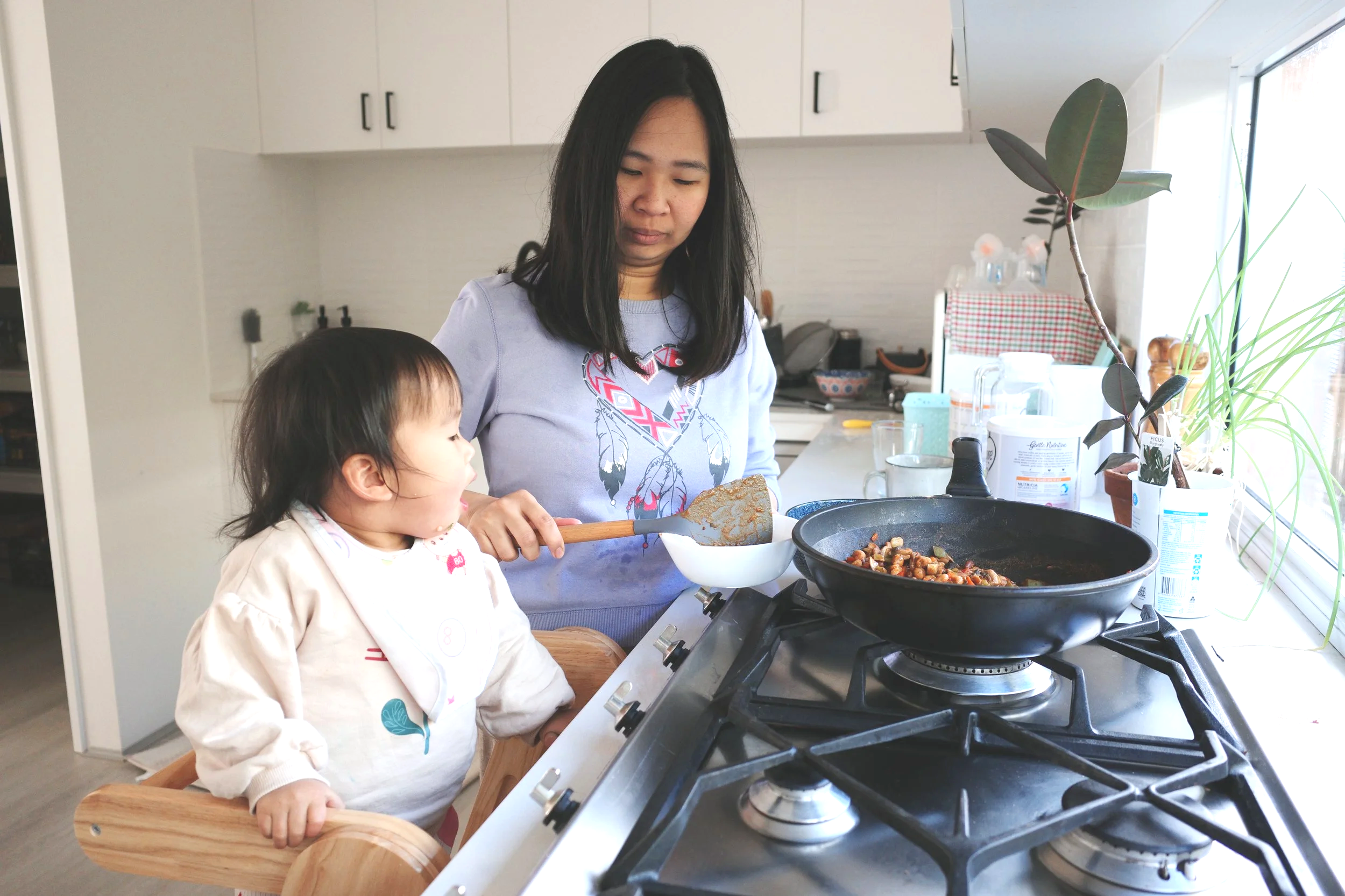
If you’ve ever felt like preparing a meal with a toddler nearby is a recipe for chaos, you’re not alone! It’s so easy to view the kitchen as a place where we need to keep little hands away because we think it’s too dangerous or we just want to prepare a meal quickly.
However, viewed through a Montessori lens, the kitchen is actually one of the richest learning environments in your home. Shifting our perspective and bringing our little ones into the process offers incredible developmental benefits for them.
The Benefits of Cooking Together
Involving your baby or toddler in food preparation goes far beyond just keeping them busy while you make dinner. Here is why it’s worth the extra time, and the occasional mess!
Rich Sensory Experience: Cooking engages all five senses at once. They are touching cold vegetables, smelling fresh herbs, listening to sizzles, seeing vibrant colours, and tasting new flavours.
Reduces Picky Eating & Fosters a Love of Food: Children are far more open to trying new things when they see where their food comes from. Exploring ingredients without the pressure to eat them builds comfort and curiosity.
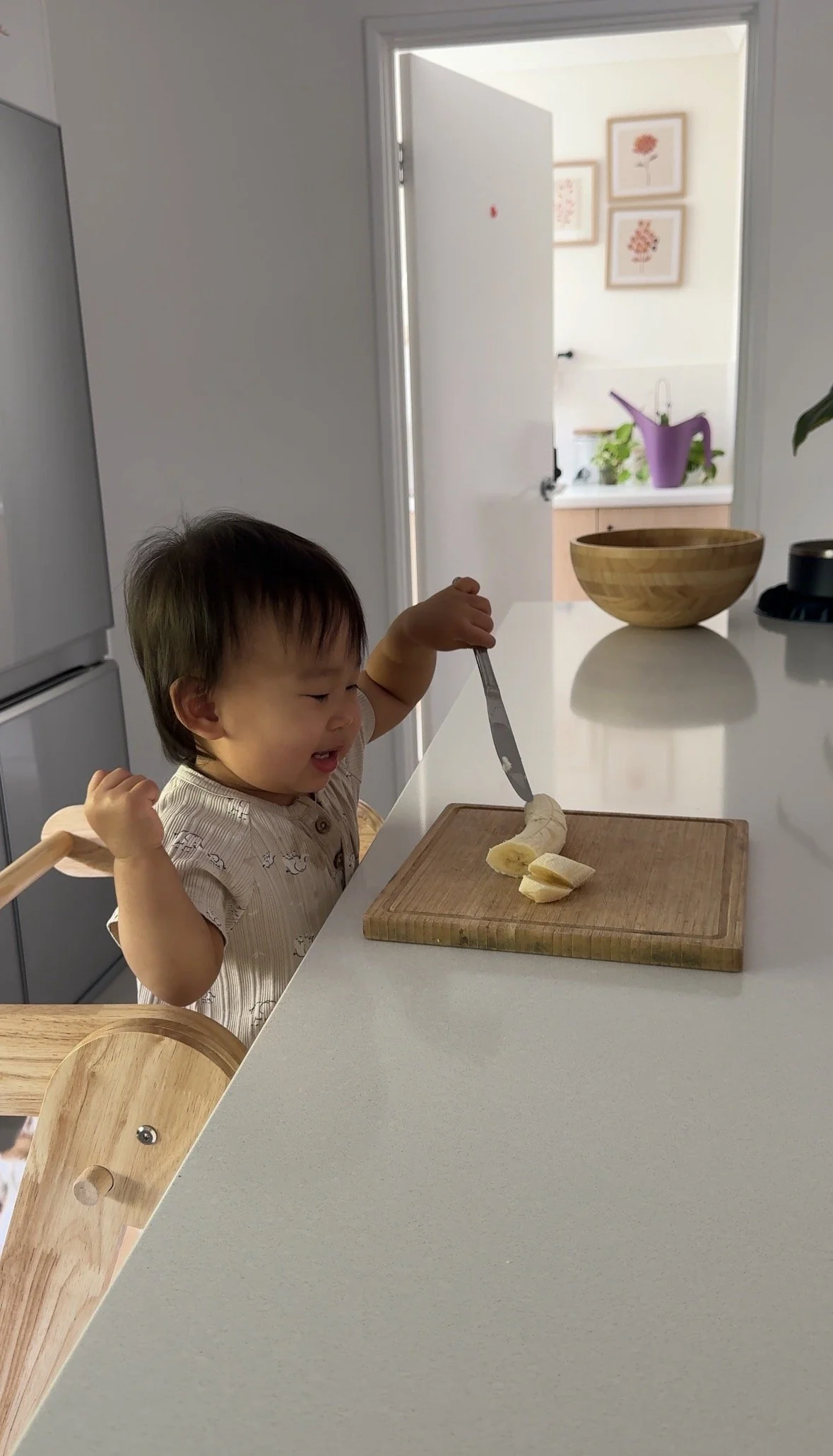
Builds Fine Motor Skills: Pouring, peeling, mashing, and transferring build the exact hand-eye coordination and muscle strength required to master cutlery and other everyday tasks.
Boosts Confidence and Autonomy: Completing a task successfully, like peeling a banana or pouring water into a bowl, gives little ones a genuine sense of accomplishment and pride.
Teaches Basic Kitchen Safety: Introducing safety early gives little ones a real understanding of how to be careful of hot surfaces and handle sharp tools with care.
Rich Language Opportunities: The kitchen is packed with natural vocabulary! As you cook, you naturally expose them to rich descriptive words (squishy, crunchy, warm, smooth), action verbs (chop, stir, pour, sprinkle), and early math concepts (half, full, more, less).
Our Cooking Journey with Maddie
When Maddie was a newborn, I would lie her safely next to me on the kitchen counter on a Topponcino so she could just watch me work. She would observe as I mixed ingredients in a bowl, listen to the rhythmic sound of the knife and smell all the aromas coming from the food. Sometimes, I would narrate what I was doing.
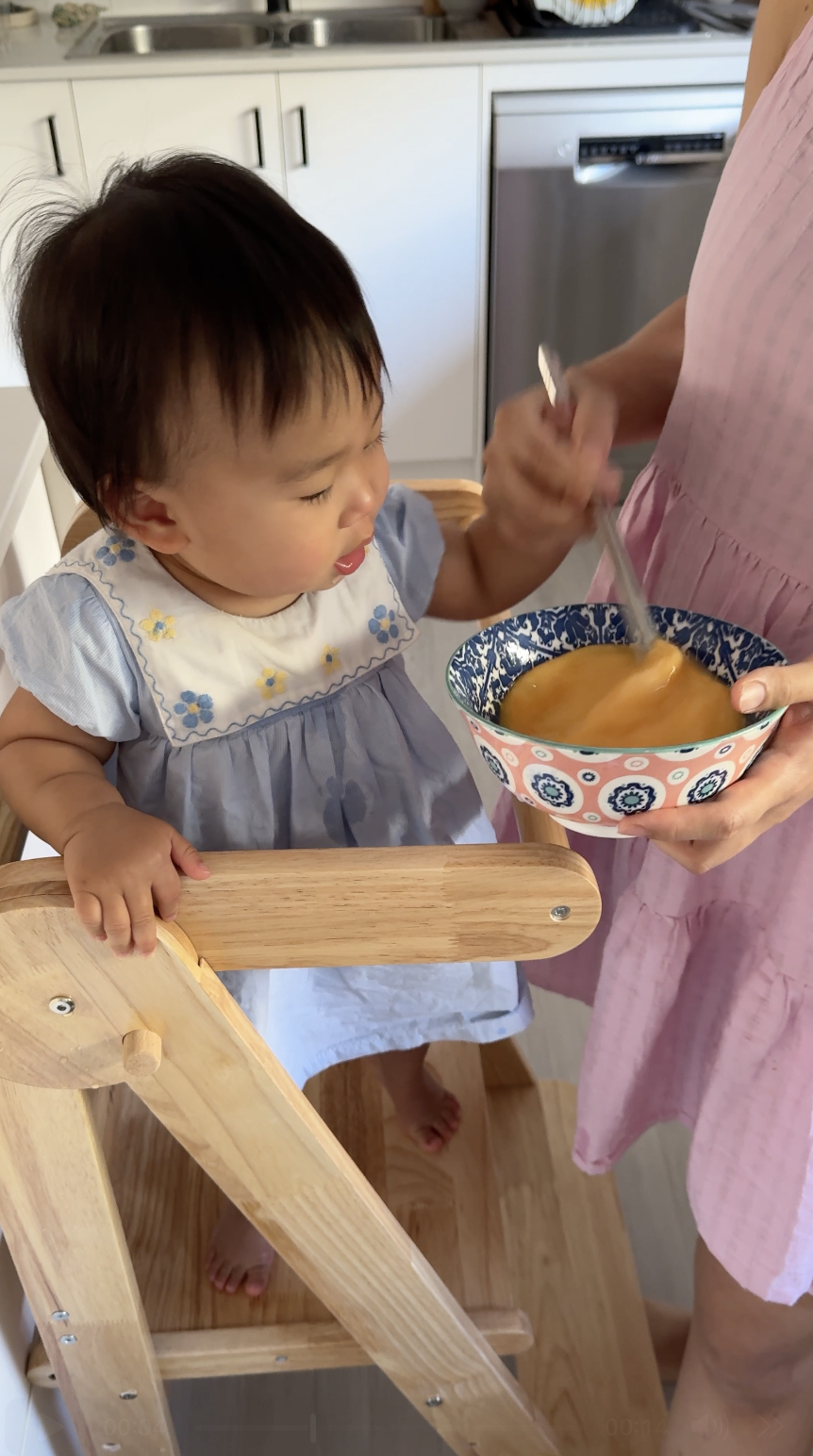
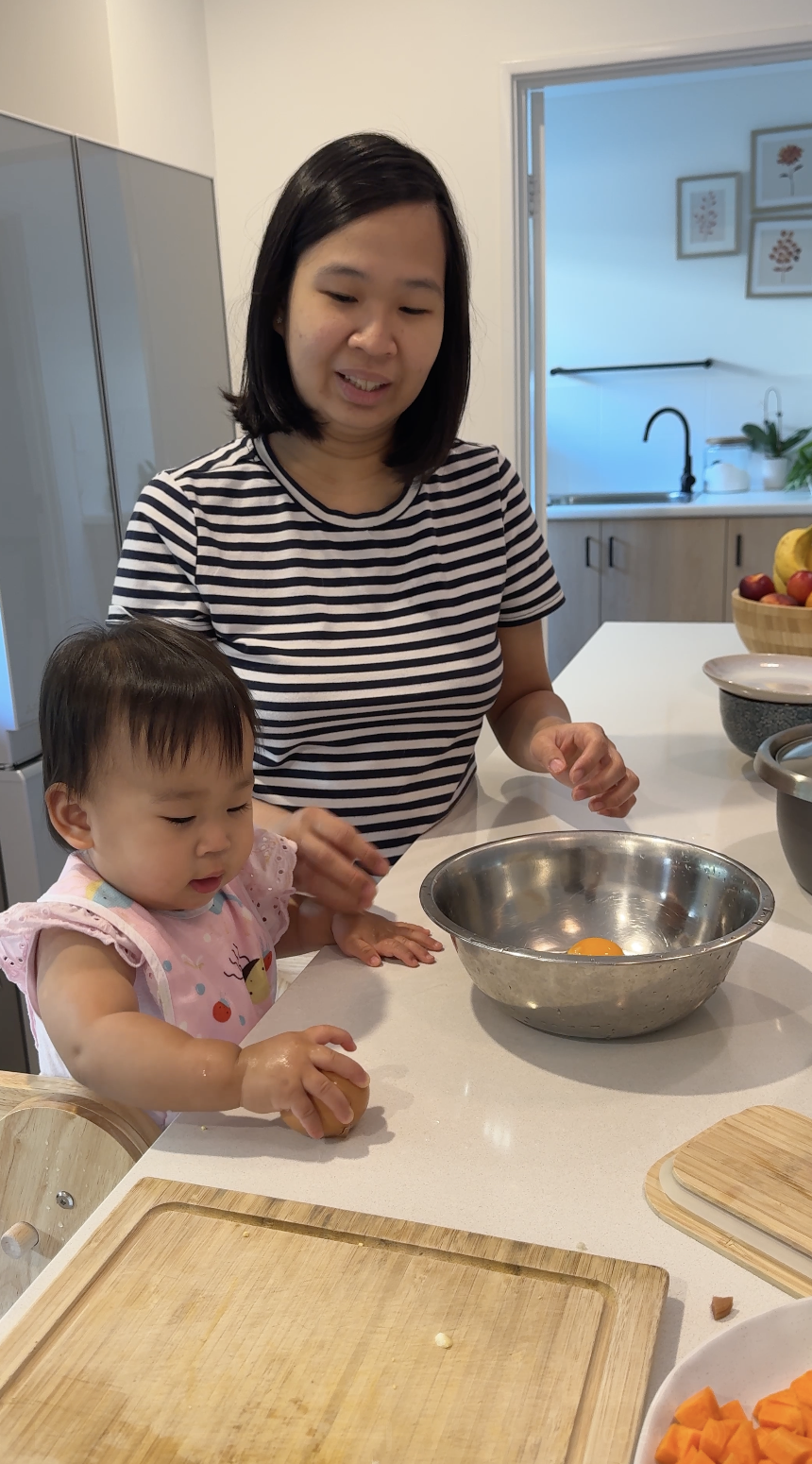
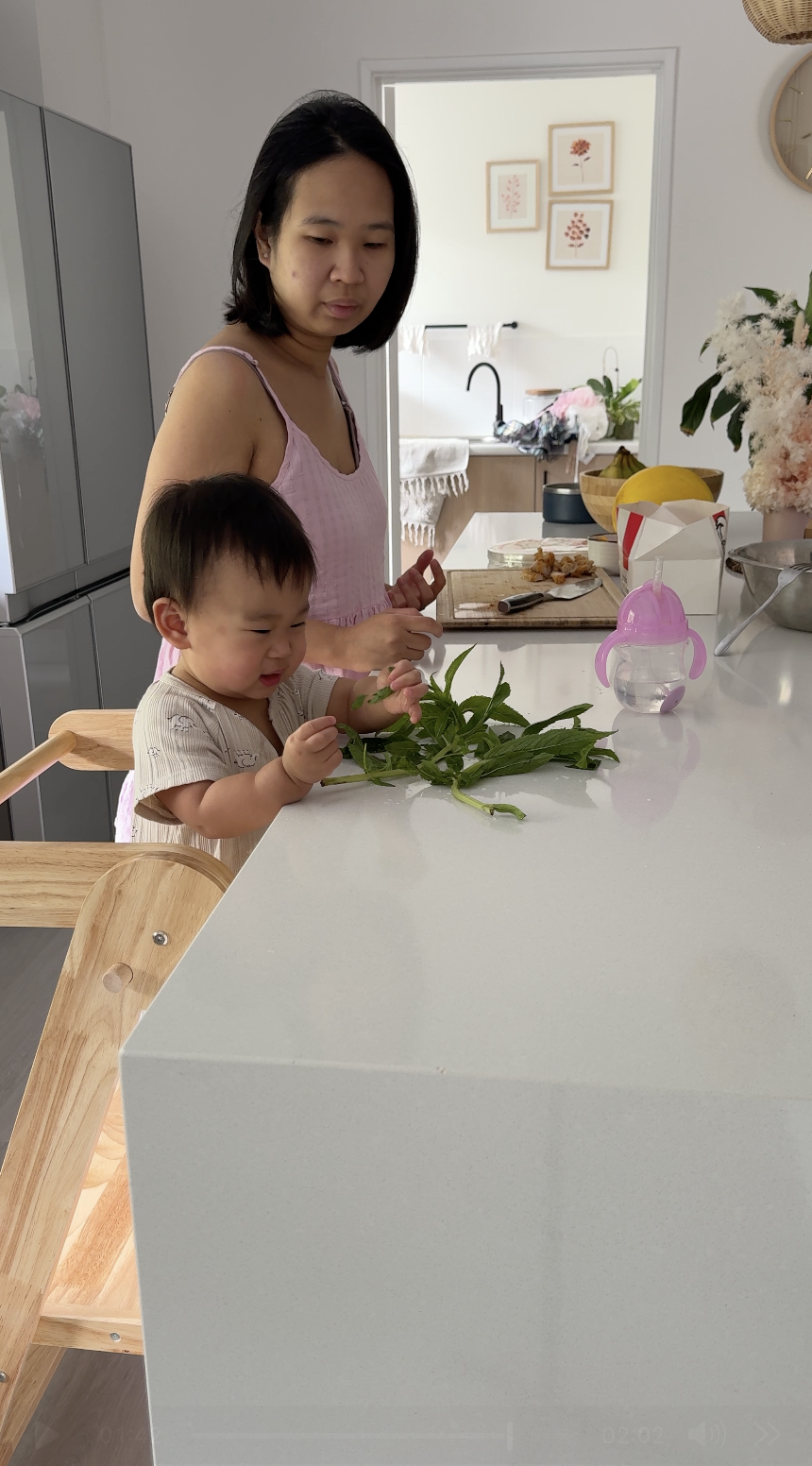
As she grew and became more capable, I slowly invited her to participate in more tasks in the kitchen. Here are some examples:
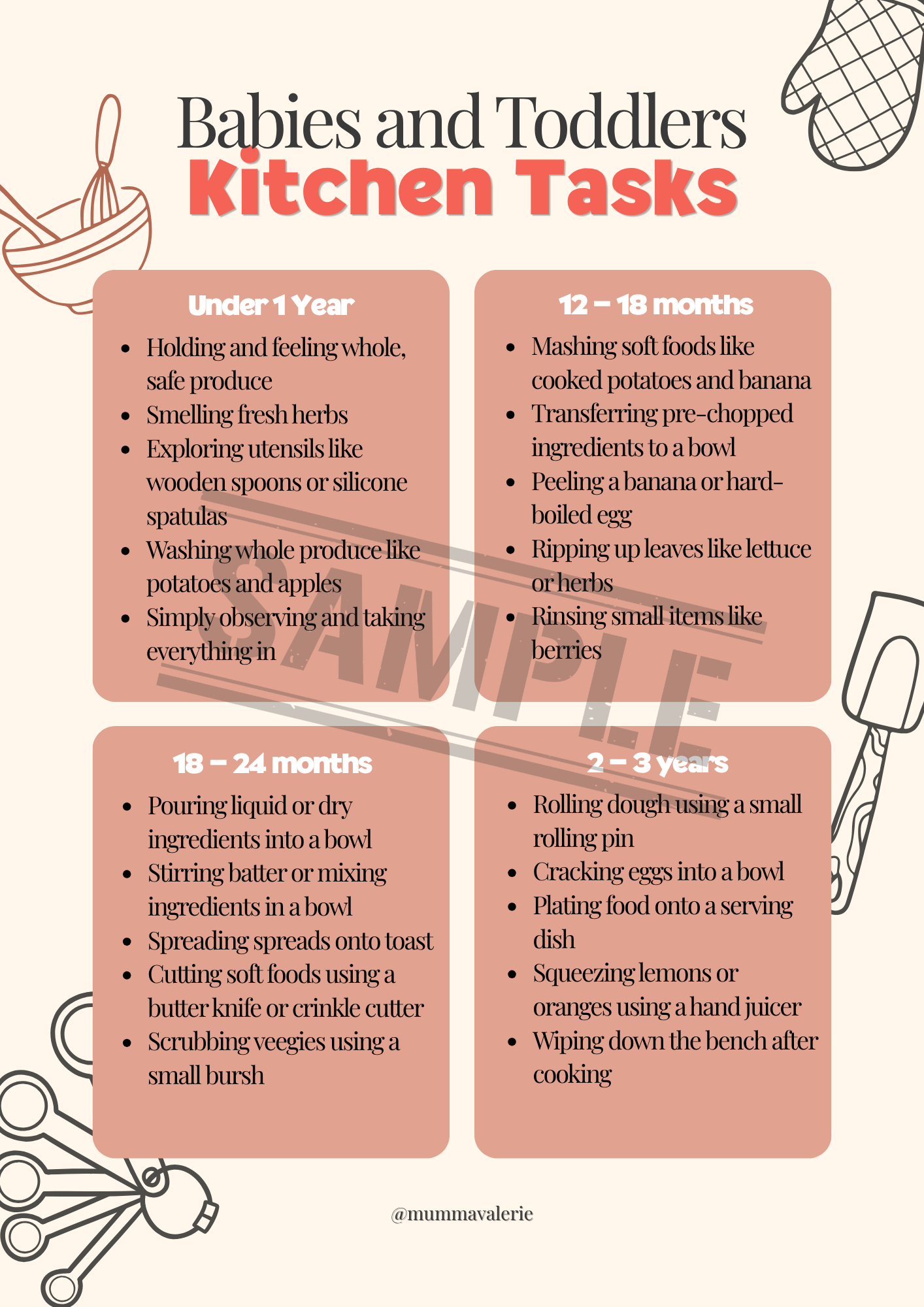
Age-Appropriate Kitchen Tasks
I created a resource to help you get started with offering kitchen tasks to your child, depending on their age. Fill in the form below to download it.
Here are some helpful tips to get started
If you're ready to bring your little one into the kitchen, keeping a few practical strategies in mind will help keep the experience joyful and stress-free:
Keep Expectations Realistic: You won't end up with perfectly uniform, chef-cut vegetables! Focus on the process and the skills they are practising, not the final presentation.
Start Small: Toddlers have naturally short attention spans, so don't expect them to participate in an entire recipe. Helping with a single step, like dumping pre-measured flour into a bowl or washing three mushrooms, is a huge win.
Embrace and Prepare for the Mess: Mess is a natural part of sensory learning. Keep a damp cloth or small towel right on the counter so you can easily wipe up spills together.
Keep Dangerous Items Out of Reach: Little hands move fast! Clear your bench space of hot cookware, sharp knives, or ingredients you don't want them grabbing before you bring your child to the counter.
Know When to Wrap It Up: Cooking together should be fun for both of you. If it starts feeling overwhelming or your toddler loses interest, it’s perfectly fine to transition them to another activity so you can finish preparing the meal in peace.