
How the Montessori Floor Bed Changed Our Lives

One of the most common questions I get when sharing our Montessori‑inspired home is about the floor bed. It’s often seen as unconventional, and understandably so. It looks very different from the traditional cot or crib many of us grew up with.
But once I understood why Montessori encourages floor beds, it made a lot of sense. Like many Montessori choices, it isn’t about doing things earlier or differently for the sake of it. It’s about respecting a child’s natural development and independence.
What Is a Floor Bed?
In Montessori philosophy, a floor bed is exactly what it sounds like: a mattress placed low to the ground (or directly on the floor) rather than in a raised cot.
The idea comes from Dr Maria Montessori’s belief that children thrive when they have freedom of movement within a carefully prepared, safe environment. Rather than being confined to a cot, children can get in and out of bed independently when they are developmentally ready.
Floor Bed vs Cot Comparison
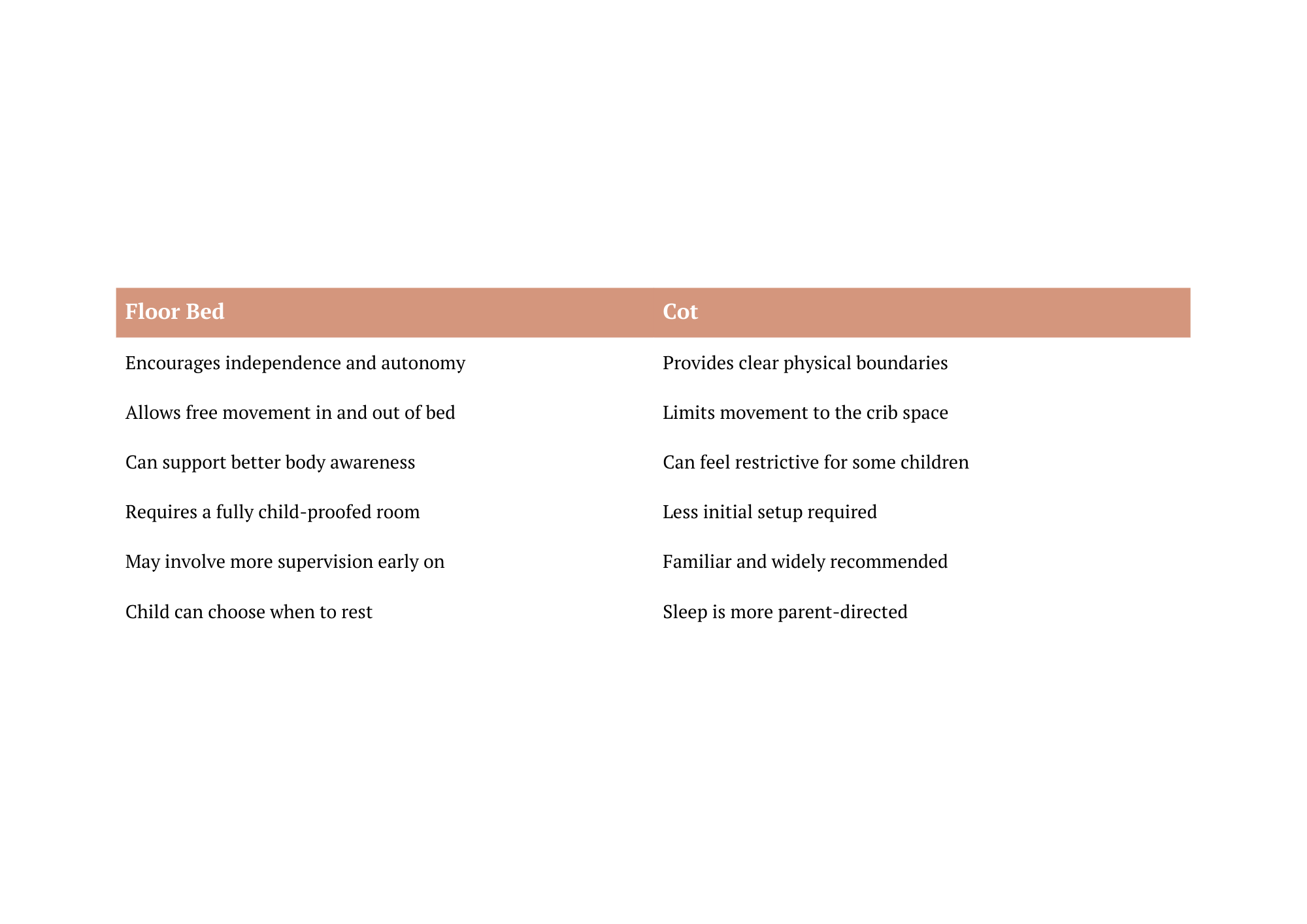
There is no “right” or “wrong” choice here, both options can support healthy sleep when used thoughtfully. It all depends on what works for you and your family.
Shop My Floor Bed
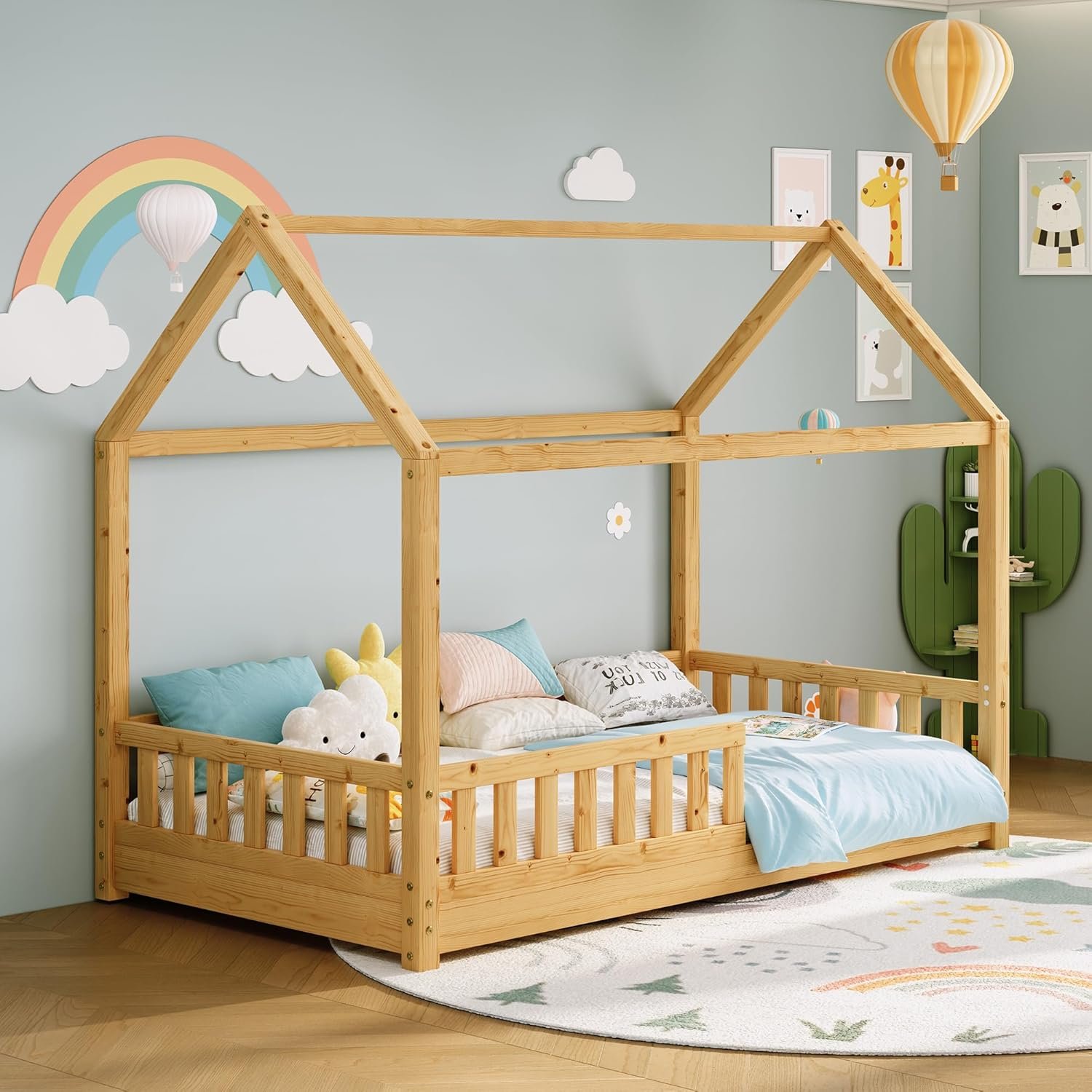

We also got the firm Vestmarka mattress from IKEA.
How the Floor Bed Has Improved Our Lives
I wanted to share what this has looked like for us in real life, because while the theory is helpful, it’s often the lived experience that makes things click.
We transitioned Maddie to a floor bed for daytime naps when she was around two months old, and later for overnight sleep at around eight months, once she started sleeping through the night. Before that, she was sleeping in a bassinet next to our bed.
When Maddie was younger, the floor bed felt so much easier than using a cot. Not having to bend and lift her in and out made a huge difference, especially during frequent naps.
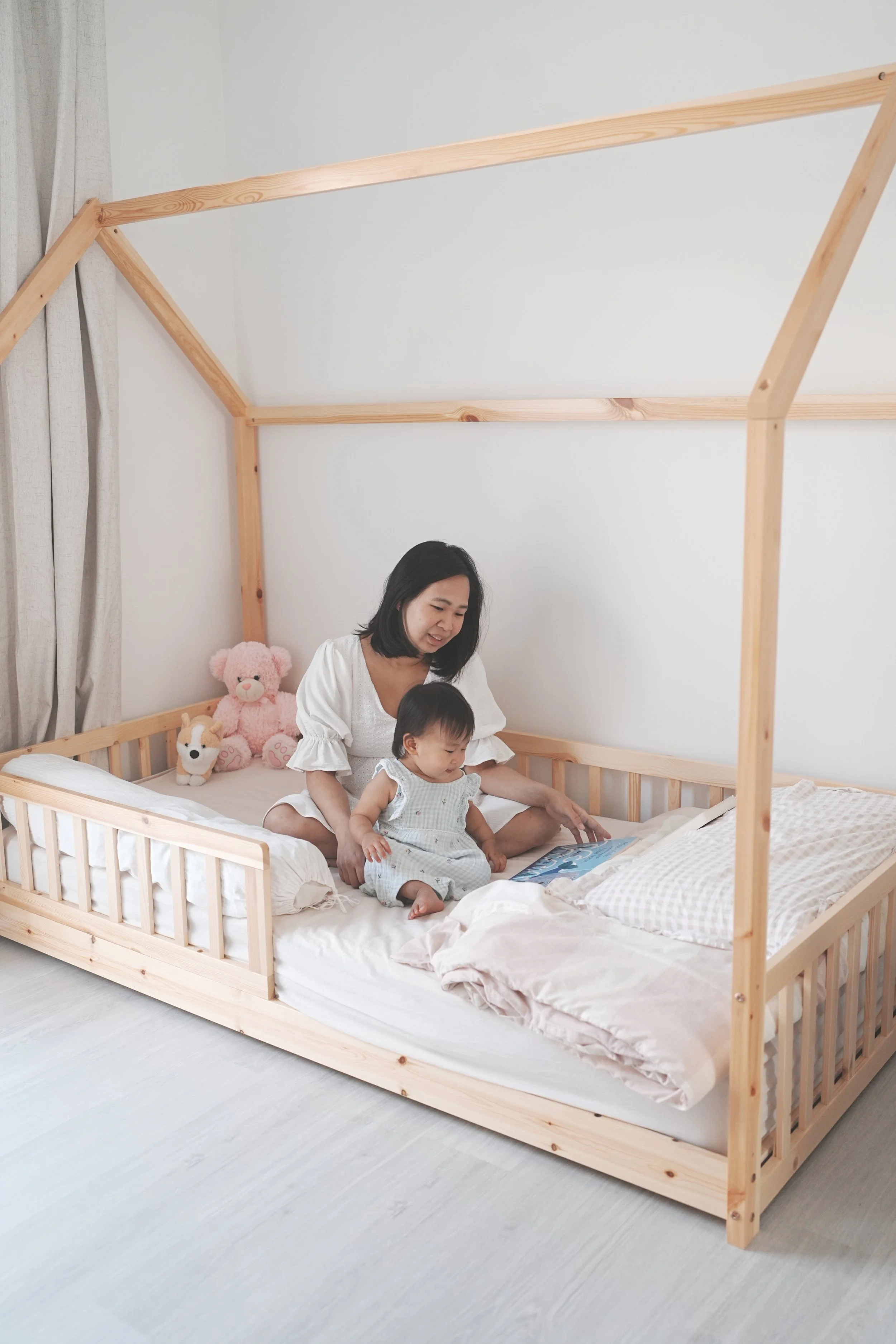
One of my favourite unexpected benefits has been our bedtime routine. Being able to sit or lie next to her, cuddle, read books, and sing songs in her own bed has made bedtime feel slow, connected, and genuinely enjoyable.
I also think the floor bed played a role in helping Maddie become an independent sleeper. That’s because it was so easy for us to use gentle, crib-side settling methods by lying next to her, and patting her back, shushing, or singing her to sleep. With a cot, I always felt like you had to rock them fully to sleep and then hope they didn’t wake up when you put them down (or end up awkwardly leaning over the rails). The floor bed just took that pressure away and made the whole sleep process feel calmer and more relaxed for everyone.
Now, we complete her nap or bedtime routine, leave her in bed fully awake, and step out of the room. She’s able to put herself to sleep without any distress.
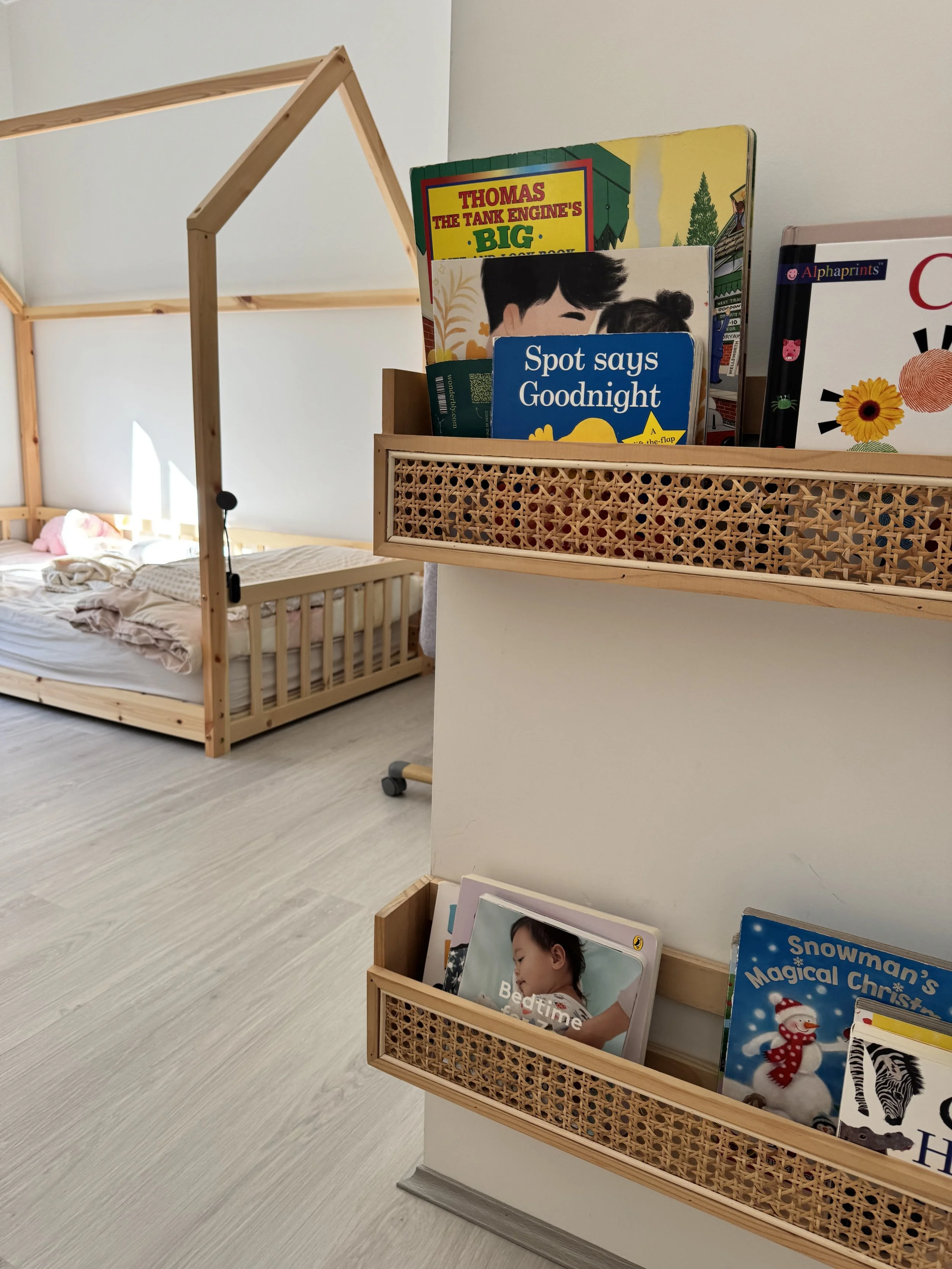
There are also days when she’s just not quite ready for her nap yet. When we leave the room after her nap routine, Maddie will climb out of the bed and quietly play with a toy or two on her toy shelf, and when she feels tired, she climbs back onto the bed herself. She’s even helped herself to books from her low bookshelf, reading until she eventually drifts off.
What we’ve noticed most is far fewer power struggles around sleep. Maddie has a sense of autonomy and trust in the process. It might sound unrealistic that a baby or toddler can play and then choose to sleep, but children are far more capable and intuitive than we often give them credit for.
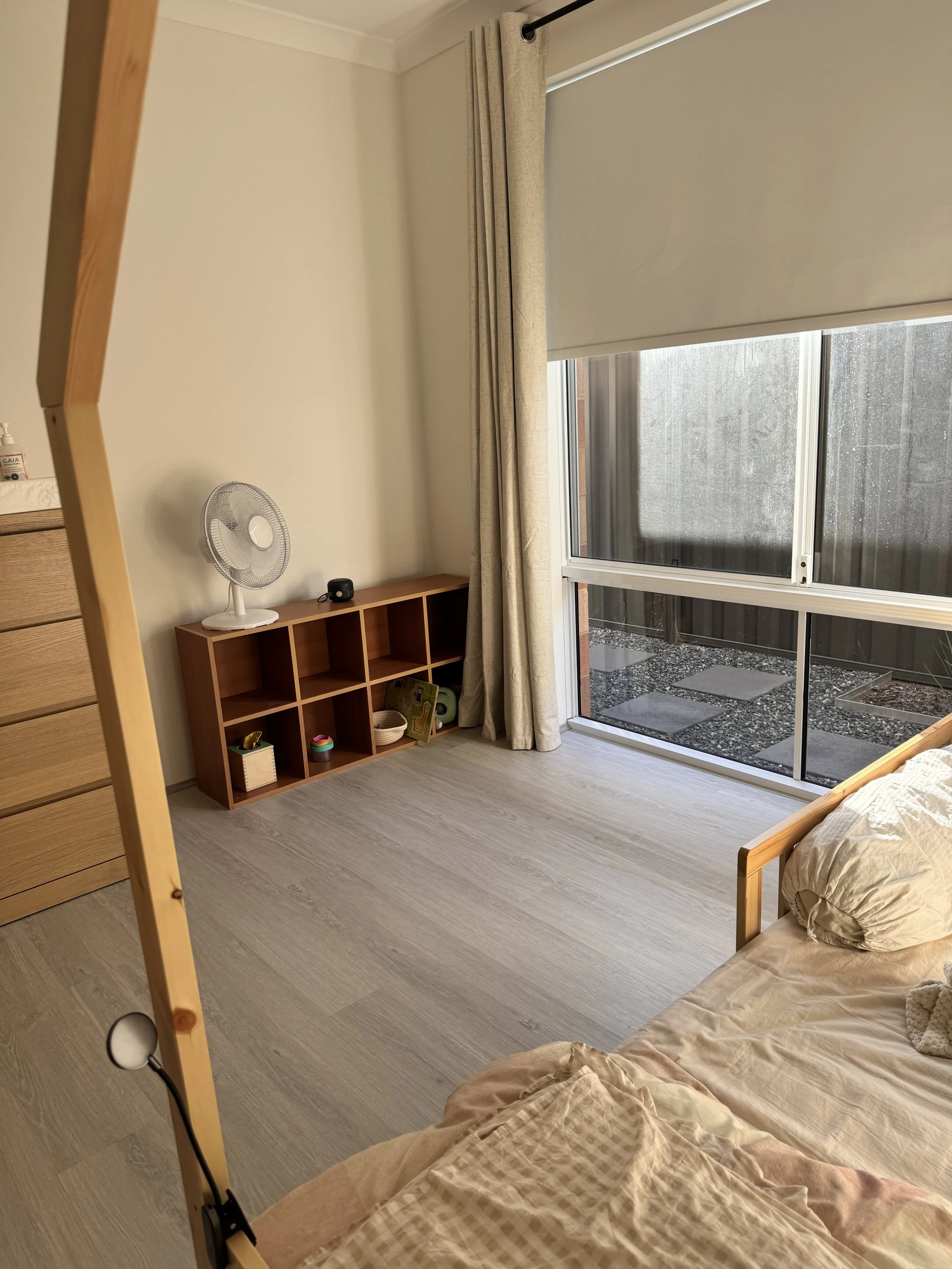
How to Transition to Using a Floor Bed
I often get asked when the right time is to transition to a floor bed, and the short answer is: there’s no perfect time.
It really comes down to what works for you, your baby, and your family and when you feel comfortable and ready for it. Some families choose to use a floor bed from the newborn stage, while others prefer to wait until their baby is older or well into toddlerhood.
If you’re considering the transition, here are a few things to keep in mind:
Spend time in the room together
Before using the floor bed for sleep, spend relaxed time in the room. Read books, cuddle, or play with quiet activities so your baby starts to feel familiar and comfortable in the space and builds positive associations with the bed.
Start small
You don’t have to switch everything at once. You might begin with just one nap a day. In the beginning, you may need to sit or lie next to your baby until they fall asleep. As they become more familiar with the bed and start associating it with rest, you can gradually support them to fall asleep more independently. The transition doesn’t have to be rushed. Slow, responsive changes tend to feel safest for both babies and parents.
How to Use a Floor Bed Safely
Safety is non‑negotiable when using a floor bed. The bed works because the environment has been prepared with intention.
Here’s what that looks like:
Fully child‑proof the room (secured furniture, covered outlets)
Use a firm, breathable mattress
Keep the bed away from cords
Use a low frame or place the mattress directly on the floor
A play mat can be placed next to the mattress if you’re worried about your baby rolling off the bed
You can also place a pool noodle along the edge (underneath the sheets)
Keep the room minimal and calm
Treat the room as the cot — it should be safe for unsupervised sleep
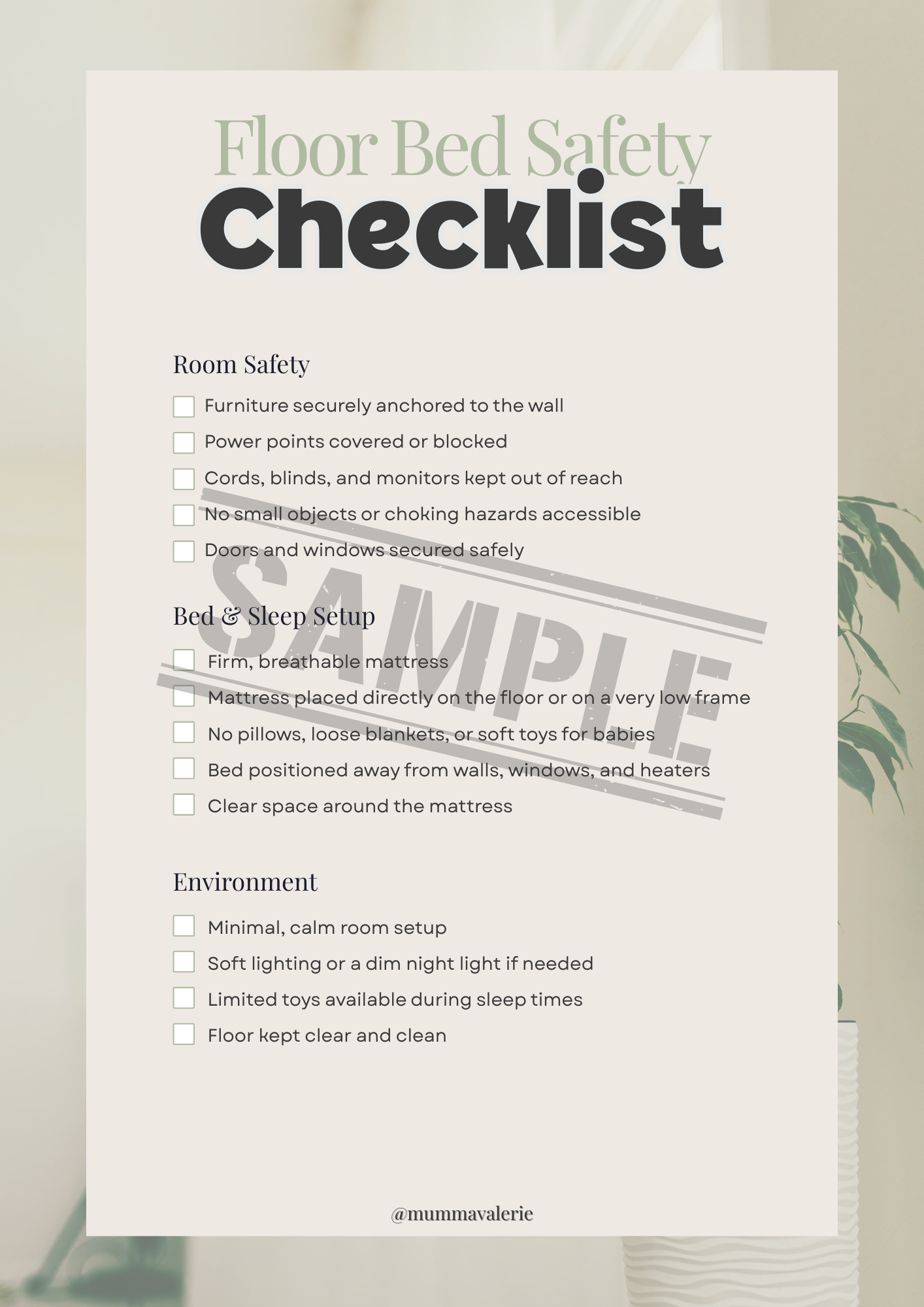
Use this checklist to make sure your child’s room is fully prepared before introducing a floor bed. Fill in the form below to download it.
Common Floor Bed FAQs
-
Some families start from birth, others transition once their baby can roll or crawl. There’s no universal timeline and it depends on what works for you and your family.
-
Yes, it can be, as long as the room and sleep setup are fully child-proofed. With a floor bed, the entire room becomes the crib, so furniture should be secured, hazards removed, and the mattress firm, breathable, and placed low to the ground. Safe sleep guidelines still apply, including no loose bedding or soft items.
-
Yes, they might, especially in the beginning. However, the bed is low enough to the ground that the baby wouldn’t seriously injure themself. If you are worried, you can place a play mat next to the mattress to break their fall. You can also put a pool noodle on the edge of the mattress (under the sheet) to prevent the baby from rolling out.
-
They might get up and play if they don’t feel tired, but it’s up to us parents to trust that our babies are intuitive beings and will eventually learn to bring themselves back to bed when they are sleepy.
-
Yes, many families do exactly this. Just make sure to lift and air it out every 1–4 weeks to prevent mould and vacuum underneath to remove dust and allergens.