
How I Involve My Toddler with Chores at Home (Montessori Practical Life Skills)
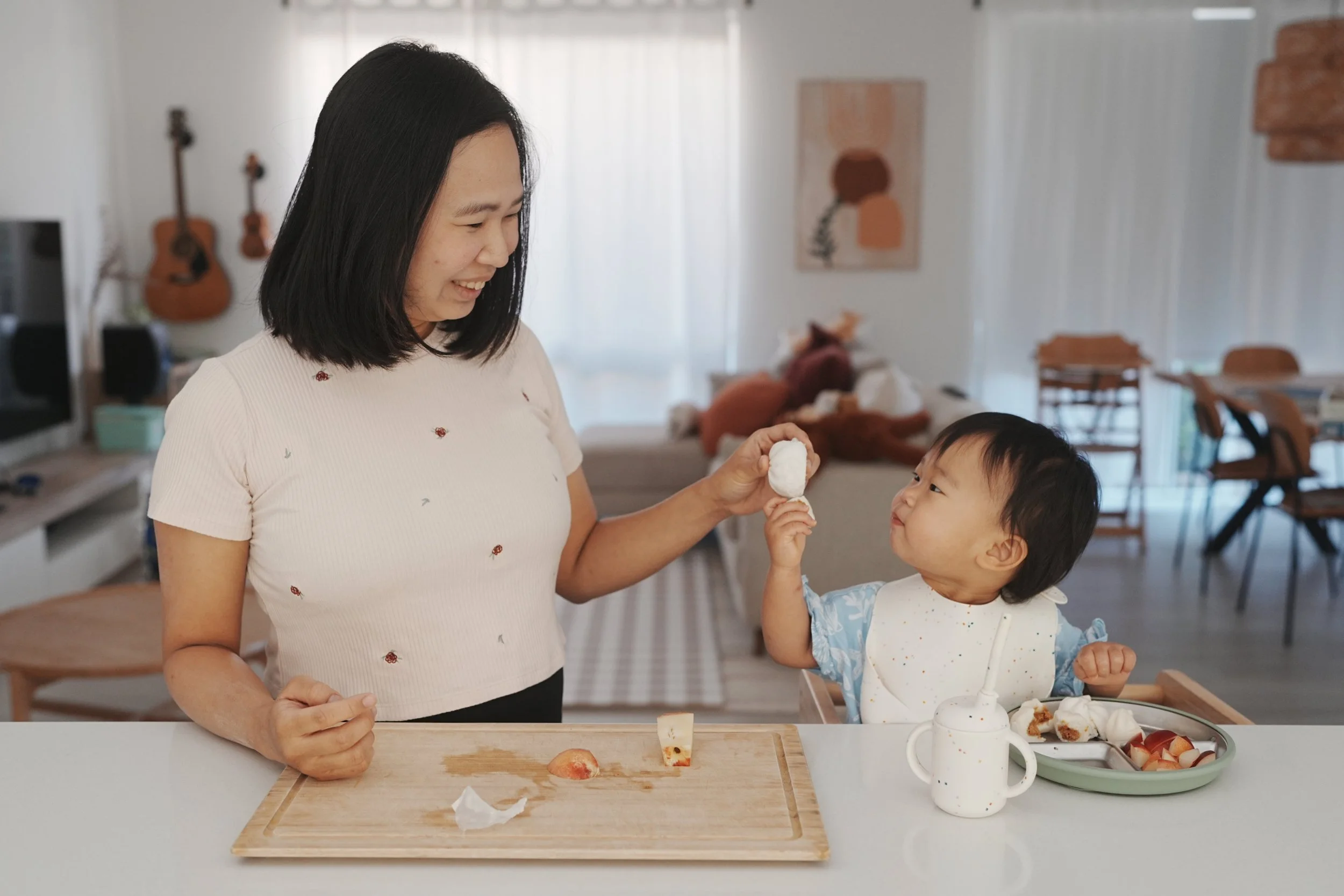
When I first learnt about Montessori, the practical life aspect resonated the most with me. Not because it was fancy or educational in the traditional sense, but because I love the idea of having my kids involved in my day-to-day life and learning that doing chores and taking care of their environment is just part of life and not something they needed to be bribed or persuaded to do.
If you’ve ever watched your toddler insist on pouring their own water, wiping a spill (over and over), or saying “I do it” with absolute determination, you’ve already seen practical life at work.
What Are Practical Life Activities?
In Montessori, practical life activities are simple, everyday tasks that allow children to care for themselves, their environment, and others.
Think things like pouring, washing, sweeping, dressing, and food-prep. The same things we do every day, just that we need to slow down, lower our expectations and be patient with our children while they’re learning to master the task.
It’s a mindset shift, so rather than rushing through our routines or doing things for our children, practical life invites us to slow down and say:
“You’re capable. Let me show you how.”
Why Practical Life Matters
Before children are ready for letters, numbers, or structured learning, they need to feel confident in their bodies and in the world around them. This is why practical life is such an important aspect of Montessori.
Here are some of the benefits of practical life skills:
Independence and confidence
When children are trusted with real responsibility, something shifts. They stand a little taller. They believe in themselves.
Focus and concentration
There is something incredibly grounding about meaningful work. Children will repeat the same task again and again, not because they’re told to, but because it meets a deep internal need to gain mastery over a certain activity.
Motor development
All those small movements like pouring, scrubbing, and buttoning quietly strengthen the hands and body in ways that later support writing and coordination.
A sense of order
Children crave predictability and structure. Practical life activities follow clear sequences, helping them make sense of how things work.
Emotional and social growth
When children care for their space and contribute to family life, they feel like they belong, not just as helpers, but as valued members of the family.
Chores My Toddler Helps With at Home
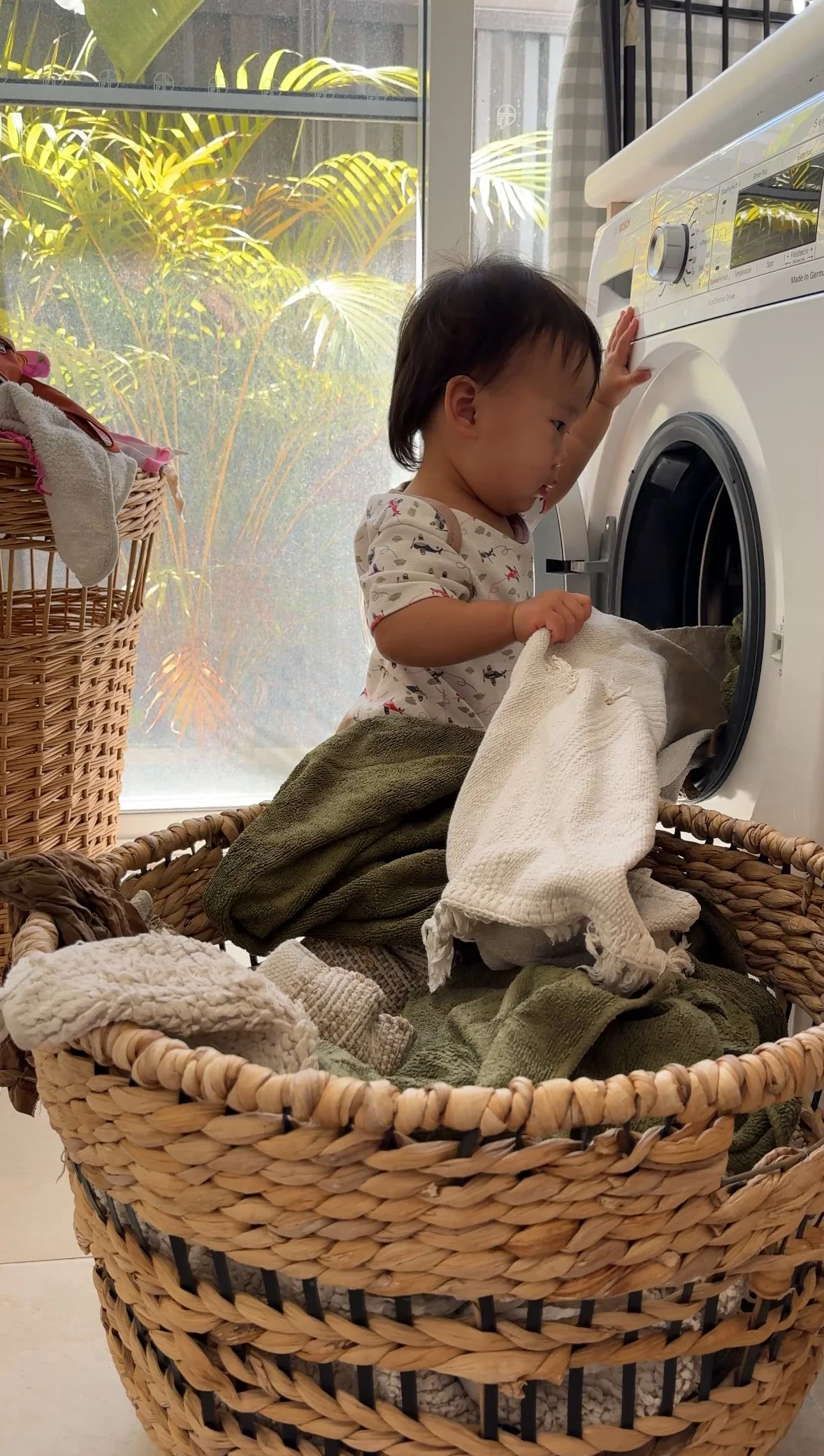
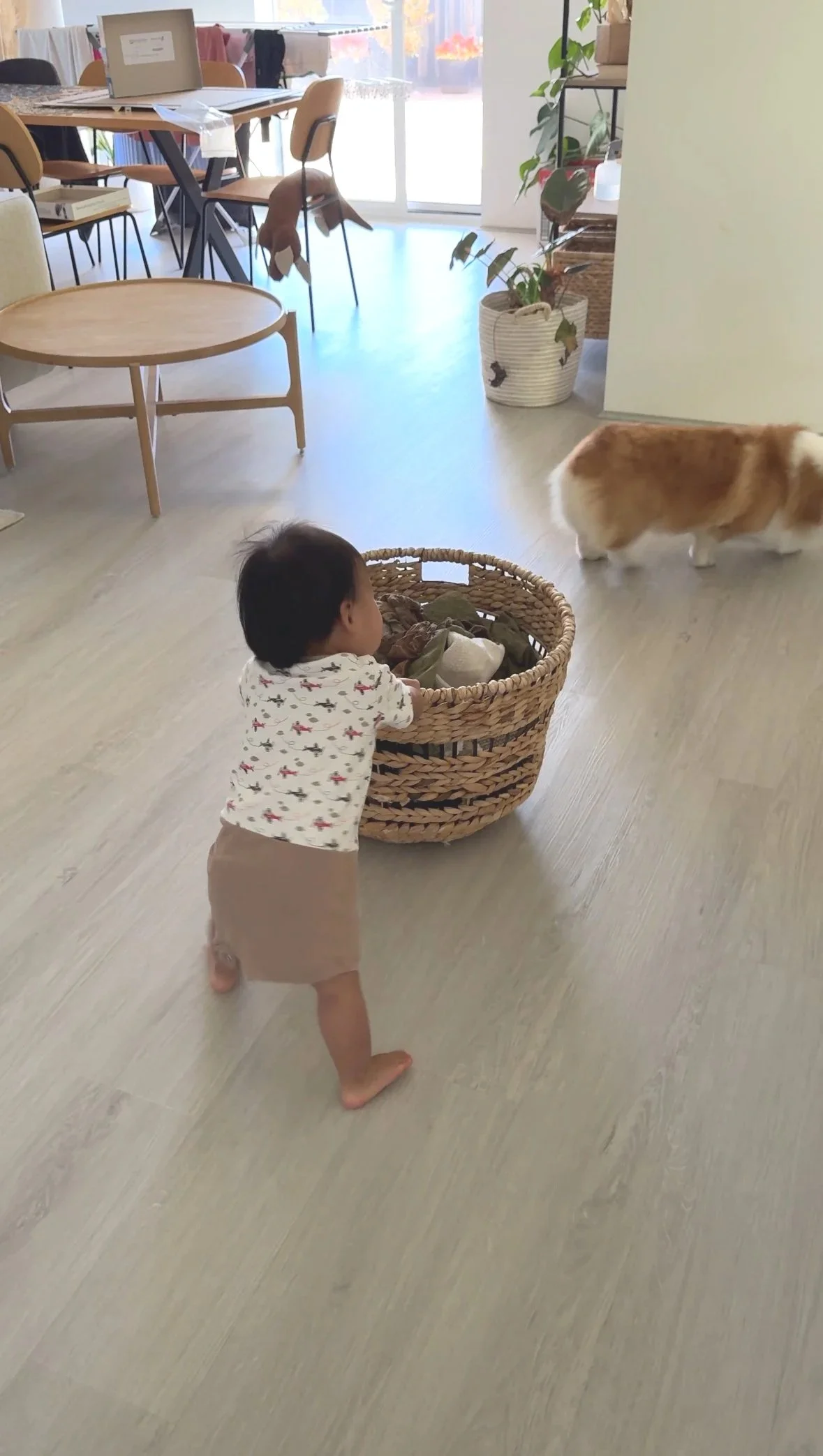
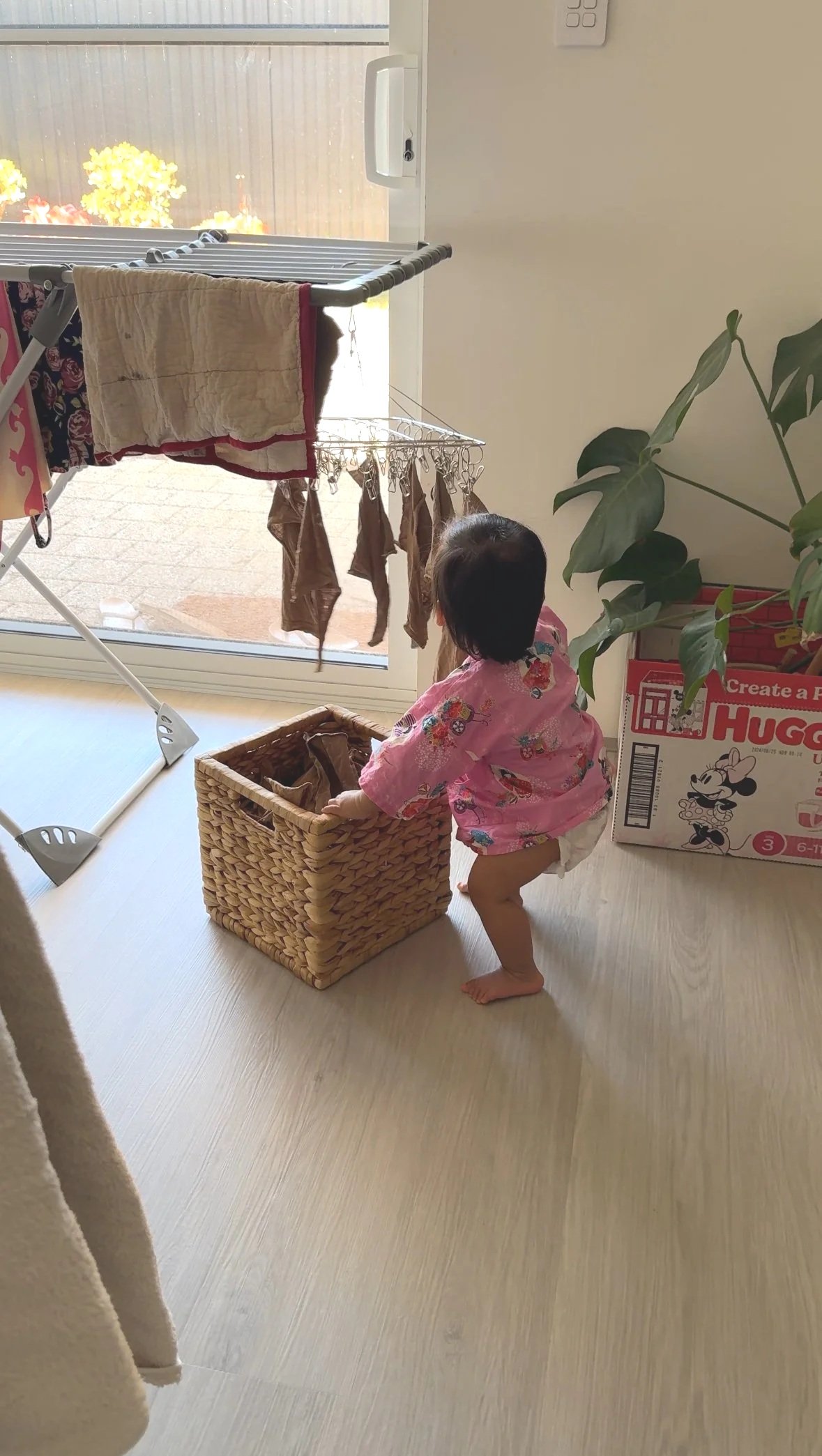
At the time of writing this blog, Maddie is 15 months old, and these are some of the practical life skills activities she currently participates in at home.
It fills me with so much joy and pride when I see Maddie attempting these tasks. I can see the satisfaction on her face when she successfully removes all the clothes from the washing machine or when she puts a piece of fruit into the juicer.
It doesn’t go perfectly all the time; sometimes she might only want to remove a few pieces of clothing before she gets distracted with something else. But that is ok, I let her lead, and I know that her focus and concentration will continue to grow as she gets older.

Practical Life Activities by Age
These age ranges are just a guide. Every child is different, and it’s best to follow your child’s lead and let them show you what they are ready for.
Infants (0–12 Months)
Even babies benefit from being included in daily life.
Watching food preparation from a safe spot (I used to put Maddie on the kitchen counter before she could roll)
Letting them pick up and pull open a diaper
Pulling out wipes from the dispenser
Watching you do laundry and feel different textures of clothes
Participating in dressing by lifting arms or legs
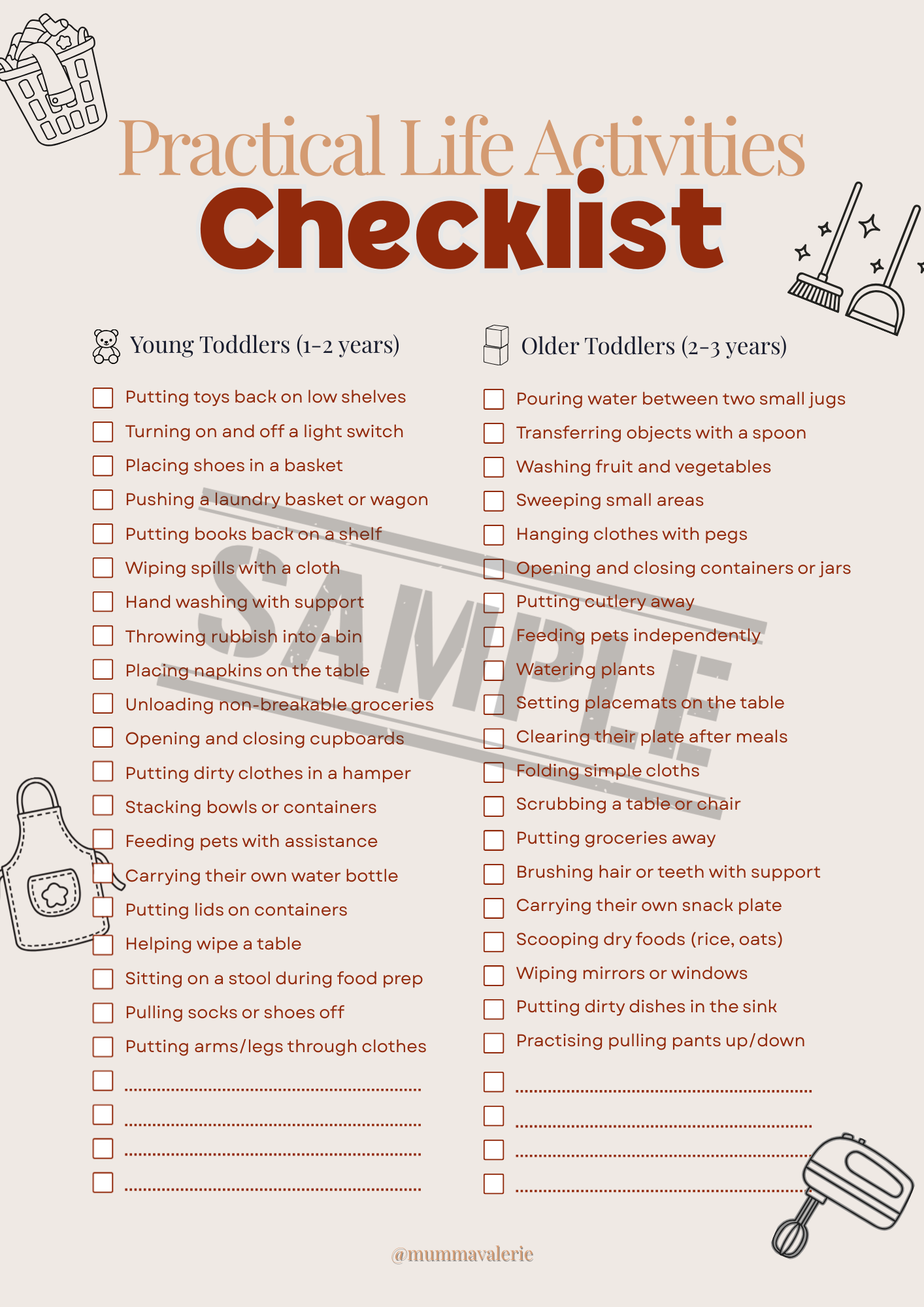
Young Toddlers (1–2 Years)
This is often when the “I do it myself” phase really takes off.
Carrying small items
Putting toys back on shelves
Pushing a laundry basket
Placing napkins or cutlery on the table
Washing hands with support
Helping wipe spills
Putting shoes in a basket
Older Toddlers (2–3 Years)
At this age, repetition is everything.
Pouring water between jugs
Transferring objects with a spoon
Washing fruit or vegetables
Sweeping small areas
Feeding pets
Hanging clothes with pegs
Opening and closing containers
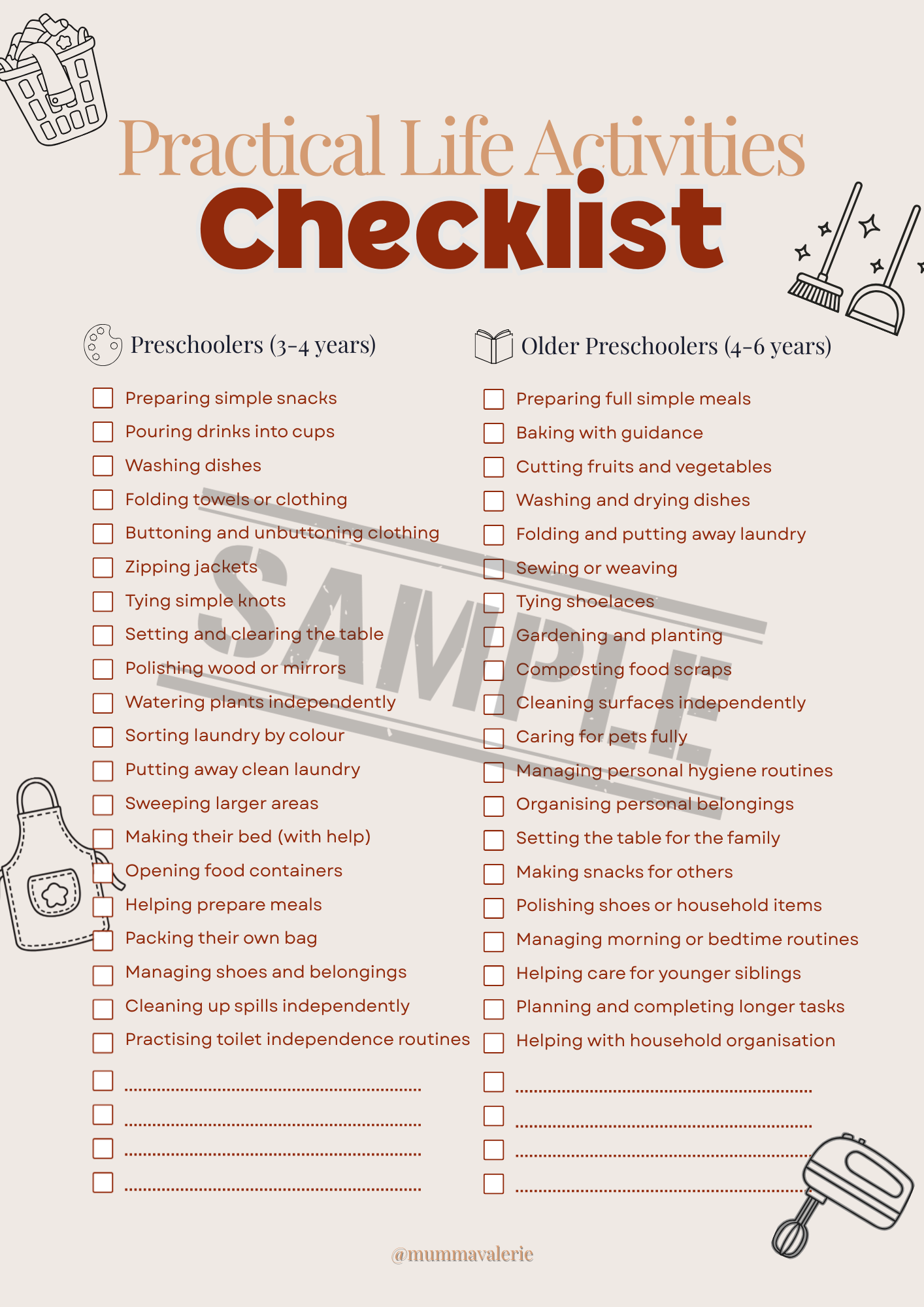
Preschoolers (3–4 Years)
Children are often ready for more responsibility than we expect.
Preparing simple snacks
Washing dishes
Folding towels or cloths
Practising buttons, zips, and ties
Polishing mirrors or wood
Setting and clearing the table
Watering plants independently
Older Preschoolers (4–6 Years)
At this stage, children can make meaningful contributions to family life.
Making simple meals
Baking with guidance
Sewing or weaving
Caring for younger siblings in small ways
Managing personal belongings
Completing longer tasks
Gardening and composting
I created a FREE printable “Practical Life Activities Checklist” for each age group. Simply fill in the form below and it will be emailed straight to your inbox.
How I Approach Practical Life at Home
A big reason why I love incorporating practical life into my daily routine with Maddie is that it’s so much easier than figuring out ways to entertain her with toys and activities. Toddlers actually love being involved in the home and doing what they see us do.
During Maddie’s waking hours (especially in the morning), I will usually try to get the chores out of the way and invite her to help me if she’s interested. Sometimes she would rather play independently, and I’ll just go about doing what I need to get done. I’ll offer little moments of connection in between, like a cuddle or reading a book together, to fill her emotional cup.
You don’t need specific Montessori equipment or expensive materials. Most of what we use is already in our home.
A few things that have helped us:
Use real tools, just child-sized
Make things accessible (place things at the child’s height, stools, open shelves)
Demonstrate slowly, with as few words as possible
Allow spills, mistakes, and mess
Try not to jump in and fix things too quickly
Final Words
At the end of the day, involving our children in our daily lives and allowing them to practice practical life skills makes them feel more capable and confident. Capable and confident children become independent children who have a growth mindset and can face challenges and problem-solve.
When we allow children to take their time, make mistakes, and try again, even when it’s slower or messier, we’re telling them something powerful: